
Blog · Field notes · Oct 21, 2026 · 6 min
Most simulation today renders a moment or runs a mechanism. Living Worlds gives a person, a population, a building, a grid, a room, an agent or a machine a lived lifecycle, month by month for years, and checks each one once against what really happened.
Simulation has had an extraordinary two years. Worlds can be generated from a sentence, robots practise in thousands of copies of a room at once, and a global weather forecast runs in minutes. Look closely at what each of these systems holds, though, and a pattern appears. Almost all of them simulate a moment, or a mechanism. Living Worlds simulates a life: something that begins, ages, changes, remembers and wears, month after month, for years.
NVIDIA Cosmos, launched in January 2025, is a family of world foundation models that generate physically plausible video from text, images, video and robot sensor data; its Predict 2.5 release describes its task as predicting the future state of the world in the form of video, one clip at a time. Alongside it, Omniverse supplies controlled 3D scenes and Isaac Lab runs thousands of parallel robot environments on GPUs, each one learning through episodes that reset and begin again.
Google DeepMind's Genie 3, announced in August 2025, generates interactive worlds at 720p and 24 frames a second that stay consistent for a few minutes, with visual memory reaching back about a minute. World Labs' Marble, generally available since November 2025, builds 3D worlds from text, images, video or a rough layout and exports them as Gaussian splats and meshes: a place, held still, ready to walk through.
Weather moved furthest in time. ECMWF's data-driven AIFS has run operationally since 25 February 2025, forecasting in six-hour steps out to fifteen days, and its 51-member ensemble joined it in July 2025. Digital twins of industry hold the present: the factory twins built on NVIDIA's Mega blueprint, in its October 2025 announcement, bring together realistic 3D models with live operational data. And synthetic data, in most of its uses, is a snapshot: a scene, a table or a population at one instant.
Seconds of video. Minutes of a walkable world. An episode. Fifteen days of atmosphere. The state of a factory right now. Each is excellent at its span, and each span is short.
Living Worlds gives anything a life. A person is born into a place, a family and a time; a population partners, makes homes, works and grows old; a building is lit and heated through its seasons; a feeder carries a year of a neighbourhood's power; an agent keeps what it has been told; a machine is built, commissioned, run shift after shift, worn, repaired and finally retired, among the people who work beside it. Each is stepped month by month, for years and decades, and every lifecycle is registered and then checked once against what really happened. The research register records each result as Met or Not met.
Lifetimes, twenty years ahead. Frozen on data up to 2005 and scored on 2025 figures nobody had read, Living Worlds forecast men's life expectancy twenty years on within 1.09 years across six countries, with its 80% intervals holding all six, and women's within 0.92 years across four. The first attempt, across 155 countries, came within 2.06 years for women and 2.42 for men against a target of 1.0, and is recorded plainly as Not met; most of what remained was wars, state collapse and HIV.
Families. A US population lived month by month from 1950 on each year's official rates matched how many children Americans aged 25 to 59 had had within 0.17, against 0.36 for a frontier model answering from what it had read. Counting brothers and sisters on both sides, built without a single sibling answer, it came within 0.31 against the model's 0.45, after an earlier sibling test was not met.
Scale. Living Worlds runs a billion lives' worth of months on one GPU: 1.36 billion life-months a second for 250 million lives, identical event for event to the CPU engine on all ten seeds, and replicated on a second GPU.
Path dependence that only shows at scale. After a decade in which more boys are born than girls, the men of those years are 3.4 points less likely ever to have had a partner thirty years later, in all 20 runs at a million lives. Computed life by life, the effect is zero. It exists only because lives have to find each other; its direction comes from that meeting, its size from placeholder partnership rates.
A year of power. Through 40 low-voltage feeders with no meter, Living Worlds predicted the power every fifteen minutes for a year it had never seen, ahead of calibrated physics on 38 feeders and of a learned model on 30, and ahead of both in every season. A model that learned from that checked simulation first and then from five real feeders did better than the same model taught by real measurements alone: a little real data went further.
Rooms and daylight. On six desks of a real office, Living Worlds predicted daylight every ten minutes for eleven days it had never seen, at 58.1 lux against 115.3 for calibrated physics. In four rooms never used before, it carried how sound decays and how clear it is to new positions, ahead of the registered comparison in all four, though the plain mean of the five nearest measured positions still scored higher in every room.
An agent that remembers. An agent that remembers what a person said predicted their answers four years later better than a persona, in every panel and on every question, across 1,911 people. Given only what had happened to a person, an earlier agent did no better than a persona, and that Not met set the next test.
People around a working robot. With a robot placed in its crowd, on two recording days nobody had opened, Living Worlds predicted how close real people came to a real robot more closely than a crowd blind to it, in 7 of 8 recordings.
Some effects take time and company to appear. A sex ratio at birth touches no one in the year it happens; thirty years later it decides who finds a partner, and only a world where a million lives meet can show it. A forecast of life expectancy twenty years out has to carry the shocks, cohorts and recoveries between here and there. A grid feeder's error looks different in January than in July. Moments and mechanisms leave these effects out by design, because they live in the span between.
History matters as much as time. A life in Living Worlds keeps a record: who it partnered, what it lived through, what it said. That record is what made an agent predict a person four years ahead, and it is what lets a family count its siblings on both sides. A choice made in one generation is remembered by the next.
And things wear. Bearings loosen, batteries fade and tools drift out of true; a machine's tenth year is a different machine from its first, shaped by every load, repair and idle month in between. Rooms are re-furnished, light shifts with the season, loads change on a feeder, and people learn the ways of a machine that works beside them. A simulation that runs for years gives that change somewhere to happen, and a register that scores it once, on data nobody had read, shows where it held and where it did not.
Living Worlds already holds people, families and populations over decades, and the places they live in: rooms, light, crowds and power. Its crowds have beaten standard crowd models in all six windows of a shopping-centre day nobody had opened, and in more than half the runs of four fresh Jülich experiments. Crowds are shown; robots trained among them come next, and machines lived through their whole service, from the day they are built to the day they are retired. Machines, vehicles and robots will learn their work in homes and streets, on factory floors and building sites, among people who move like real ones, before anything moves in the real one. Every new domain arrives the same way: built from measurements, checked on data it has not seen, and published.
Sources
Blog
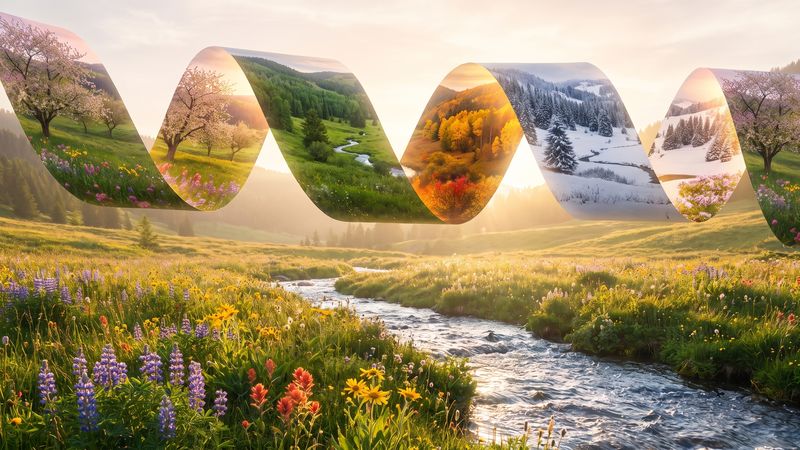
World models now generate explorable places that hold together for minutes. The next frontier is behaviour over years, many lives at once, and results checked against a reality the model has never seen.
Living Worlds' life expectancy forecasts, frozen twenty years back and scored once on years no run had seen: met for women and for men on the latest national figures, not met against 2024 national figures or across 155 countries, with honest intervals for women and a stacked UN model that did not help.

Learned weather models are now operational, faster and often more skilful than physics on ordinary days, and weaker on record-breaking ones. The habits that made them trustworthy, daily scoring against what happened and honesty about extremes, are what simulation of lives and economies needs next.